print is not dead— it’s very much alive.
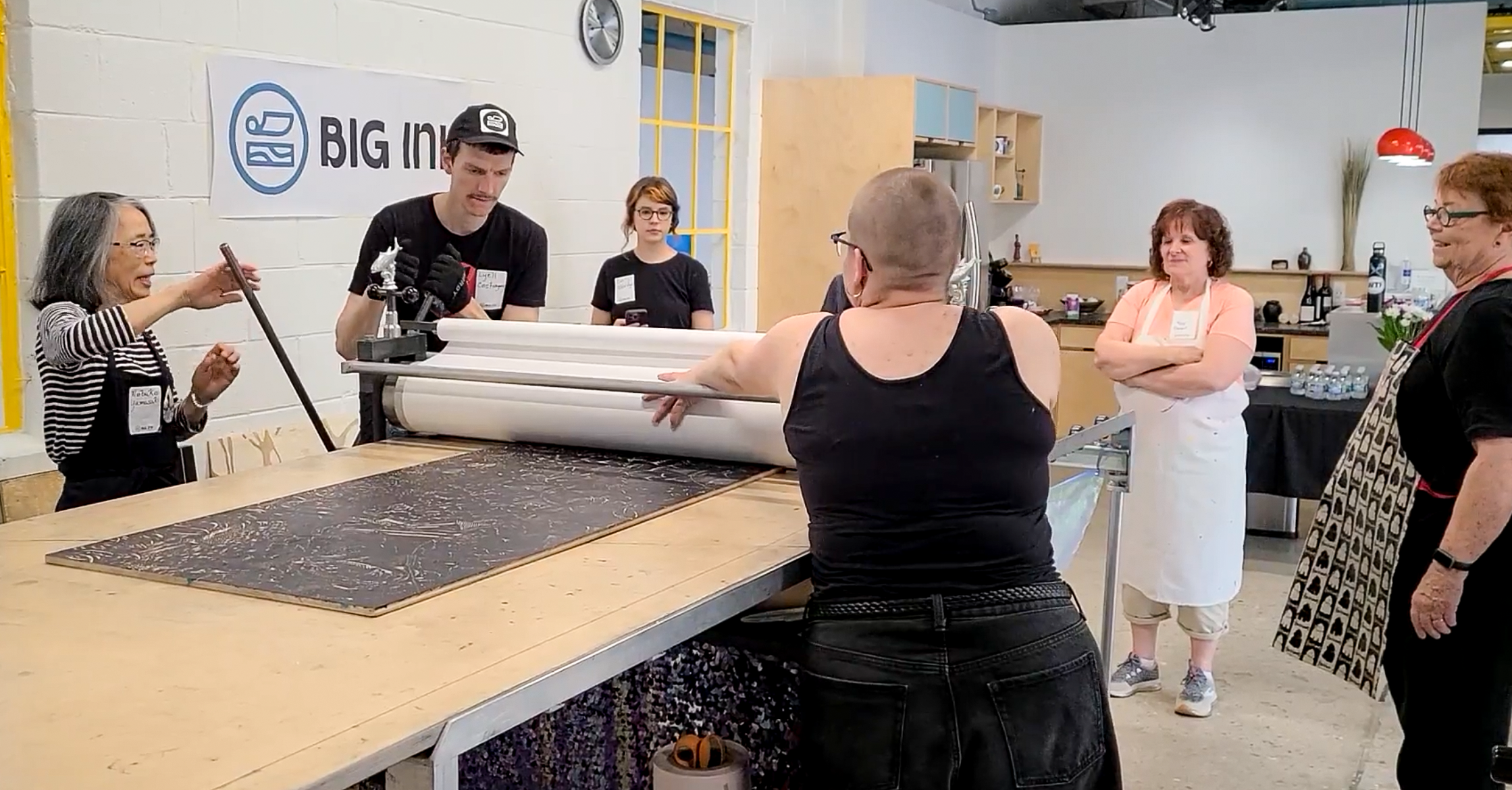
I teach printmaking in a community where there has been a vacuum for the medium for several years as past stewards have aged and passed away. print studios sit empty, gathering dust, or are shifted downwards in priority by institutions. resources and staffing have been diverted into other more universally appealing studio practices or into graphic design. as a result, very few artists practice printmaking in the area regularly. even fewer members of the general public have heard of it. however, i never shut up about it— so more local people know about it now.
printmaking, like glass and ceramics, is a natural vehicle for the creation of artist communities due to sharing equipment and sharing space. artists work together in a space— sharing responsibility for it, making connections and sharing knowledge. that is my favorite thing about it.
Printmaking is the act of creating multiples using ink and pressure to transfer a design from a matrix to a substrate— such as paper or cloth.
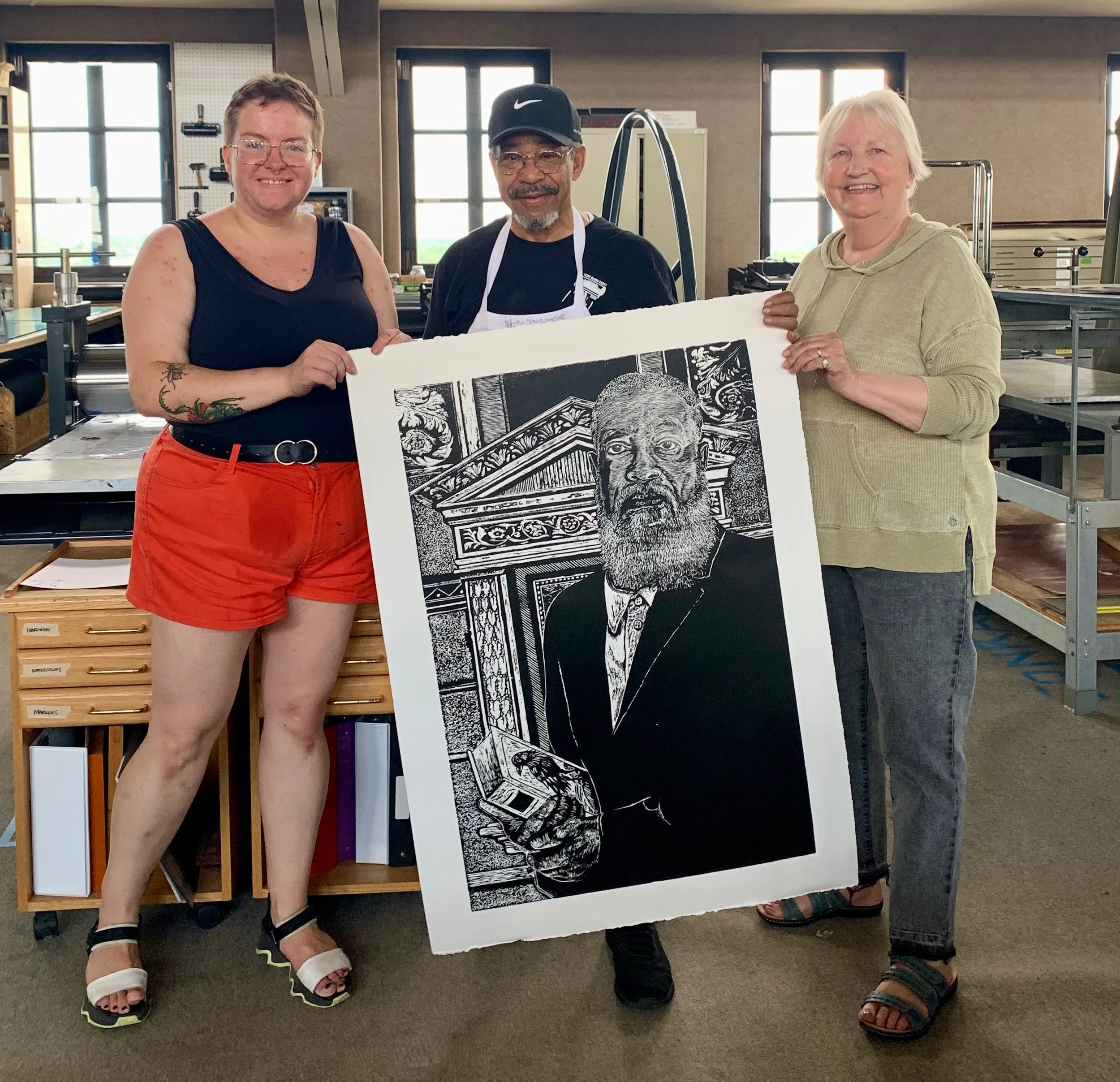
printmaking is a way of making original fine art and not a reproduction. it is not the same as digital or giclée prints of art created using different mediums.
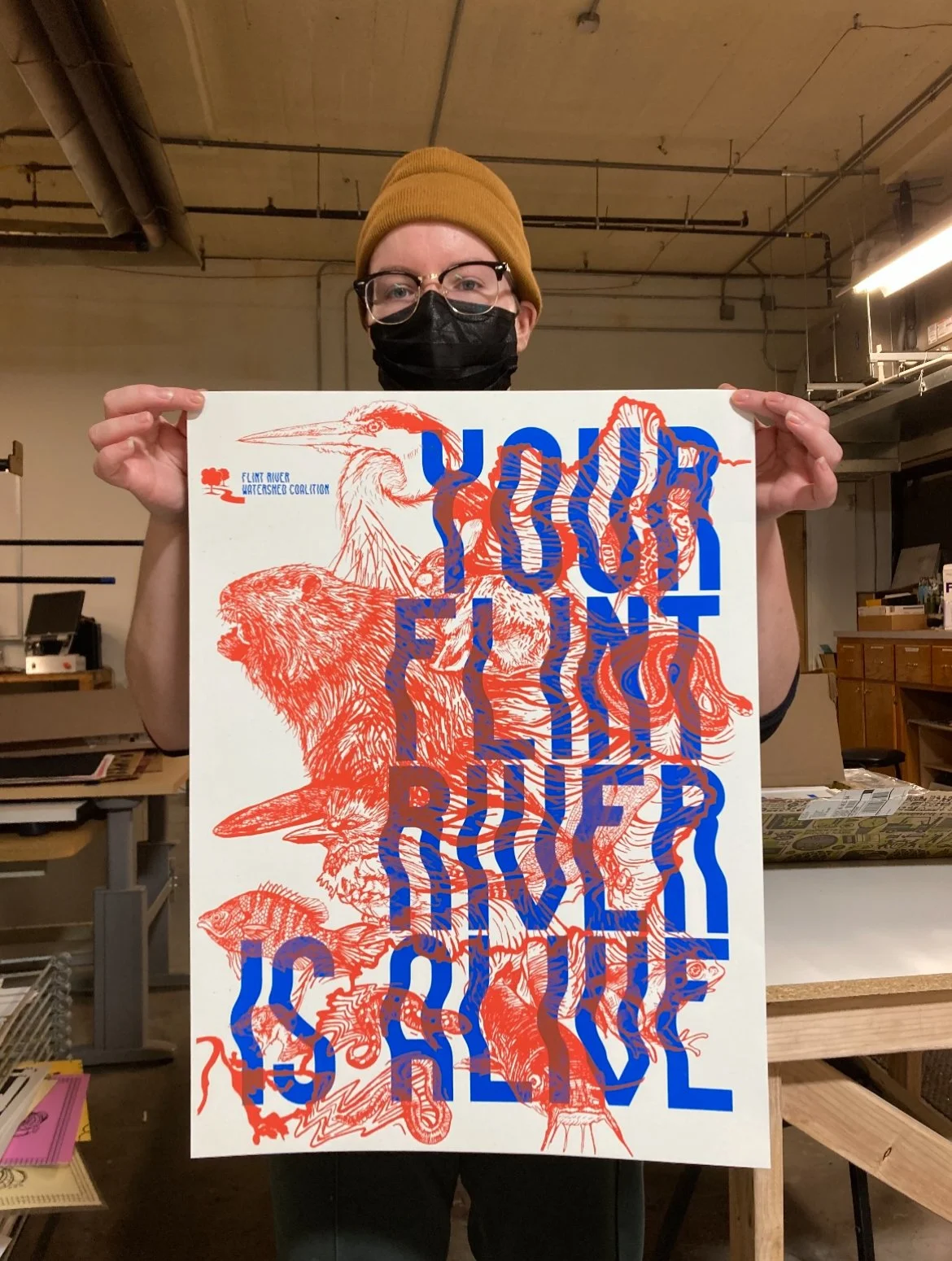
printmaking is an overarching term for several different ways of making multiples— each technique requiring different tools, different pressure, and different ways of creating the image. major families are relief, screen, intaglio, monoprinting, and lithography/planography. However, those families can be broken down further into different techniques and materials.
printmaking is one of the most accessible forms of art to sell for artists and to purchase for collectors and institutions. the nature of multiples spreads cost of production into more than one object, instead of a single painting or sculpture.
printmaking is one of the most inaccessible mediums to practice due to the need for equipment to print. some methods can be practiced with very simple equipment and tools— relief and screen printing.
printmaking has long had ties to commercial production, print ephemera and zines, counterculture, and social movements. it is a natural way to share, distribute, and send a message.
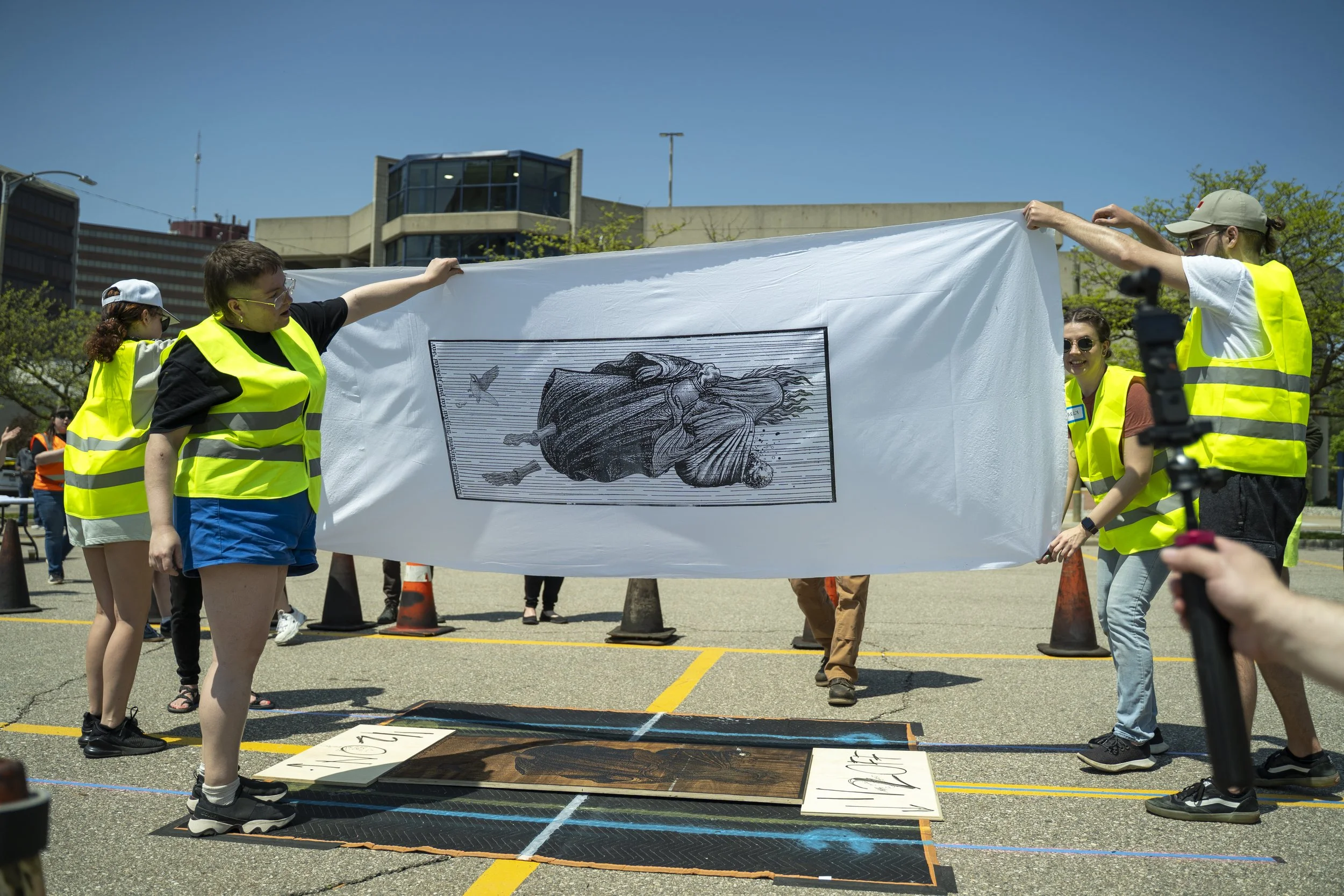
Cliff Hughes Photography
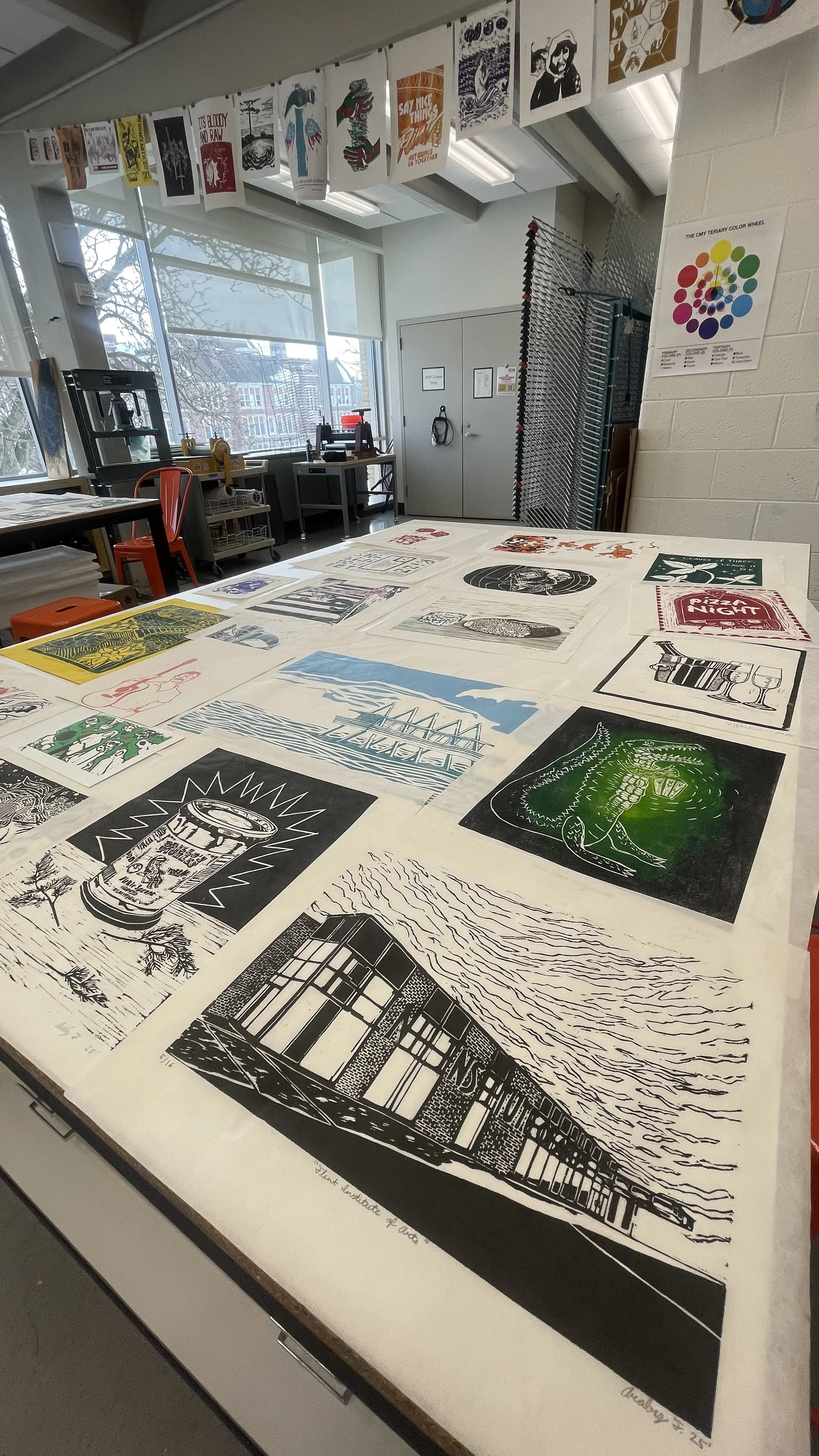
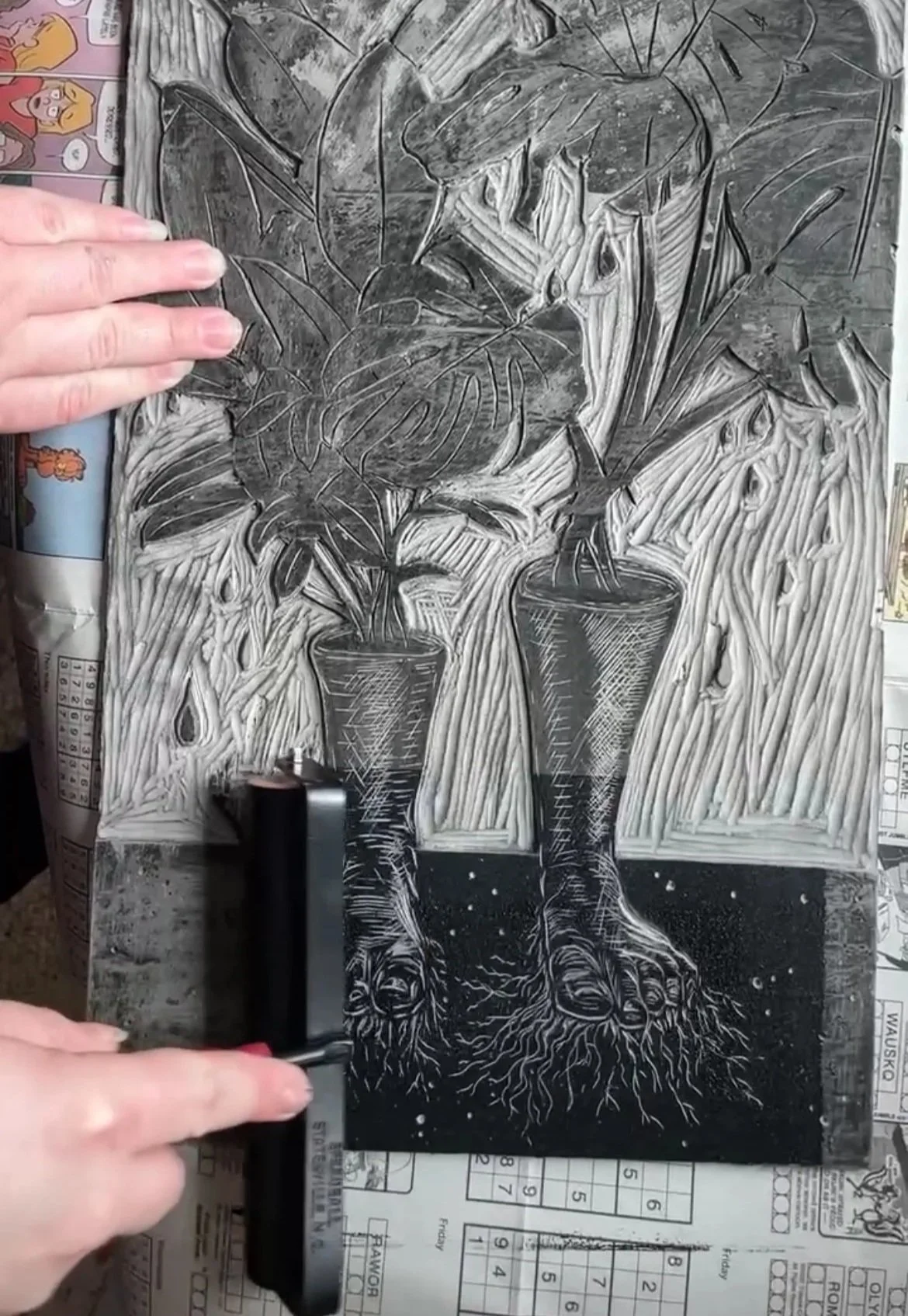
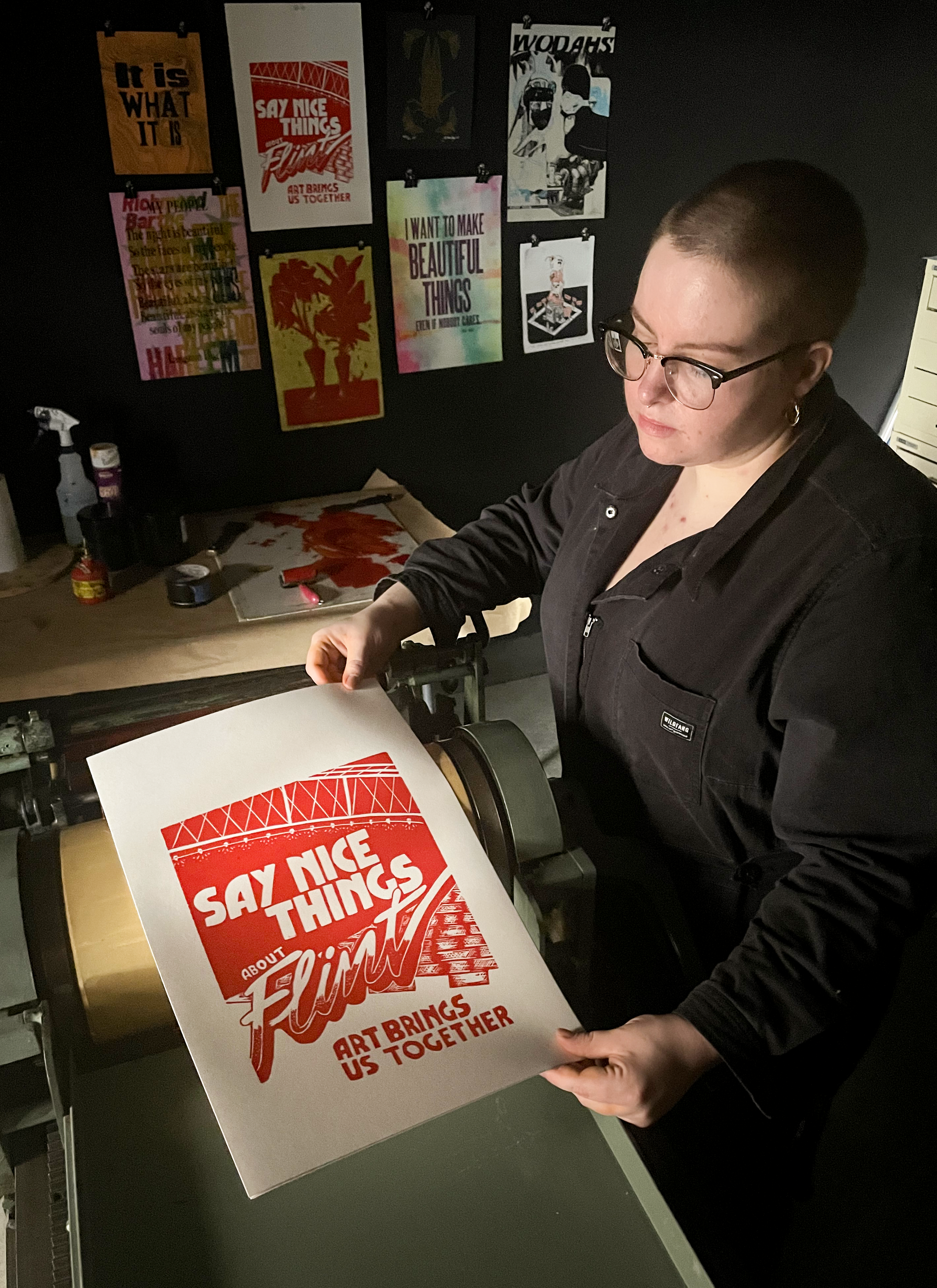
Photo: Flint Institute of Arts